
Flange Nuts vs Hex Nuts: Differences and Uses
Learn the difference between flange nuts and hex nuts, when to use each, washer considerations, matching threads and buying tips.

Flange nuts vs hex nuts: both are six-sided fasteners designed to engage a matching external thread, but they have different bearing-face designs. A standard hex nut has a conventional bearing surface, whereas a flange nut includes a wider circular flange at its base. Choosing between them depends on the joint design, the surface being clamped, the specified fastener properties and the installation method.
This straightforward guide explains the differences, common uses, washer considerations and what to check when ordering nuts for industrial applications in Pakistan.
What is a hex nut?
A hex nut is a six-sided internally threaded fastener used with a compatible bolt, stud or threaded rod. Its flat sides make it easy to hold or turn with a properly sized wrench or socket. The nut’s material, property class, size and thread must suit the complete bolted connection.
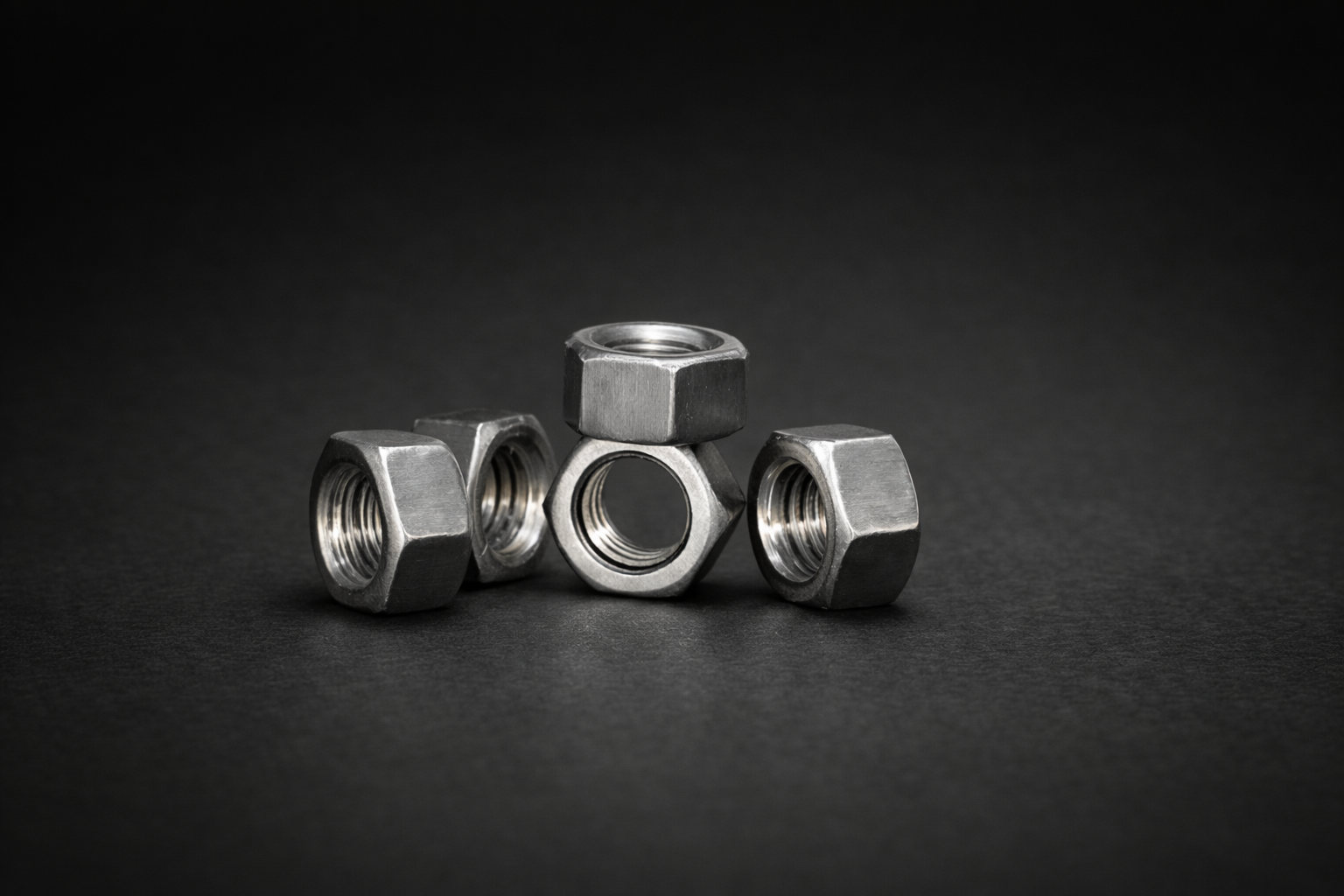
Hex nuts appear in metal fabrication, machinery, structural assemblies where properly specified, and general equipment maintenance. A separate flat washer may be used when required by the joint specification, but it should never be added or removed without considering the design.
What is a flange nut?
A flange nut is a hexagonal nut with a wider, built-in bearing flange at one end. The flange increases the area in contact with the clamped component. This can help distribute bearing pressure when the joint has been designed for that nut style. Smooth-flange and serrated-flange versions exist, and their performance should not be treated as identical.
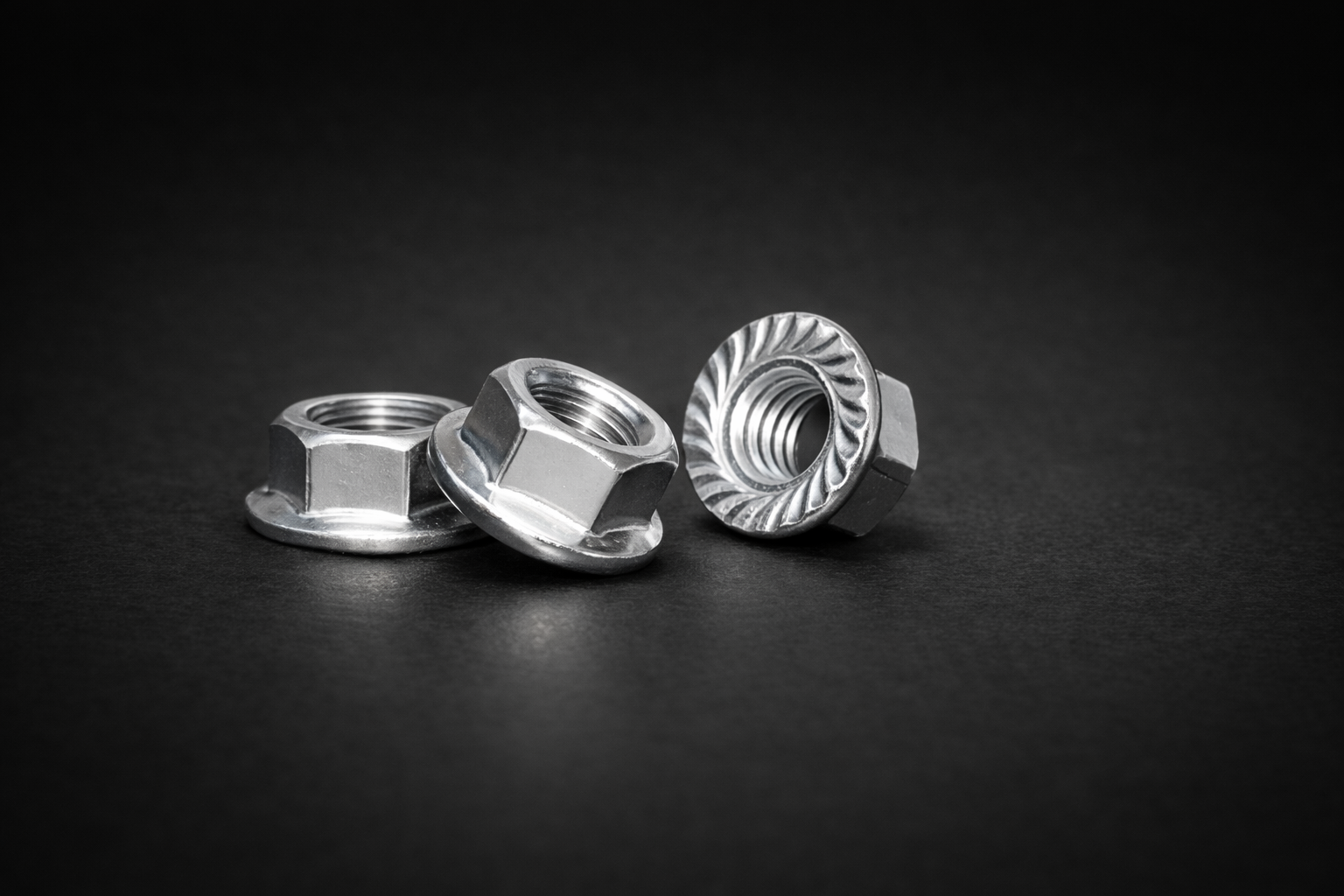
Flange nuts are found in machinery, fabricated components, and many automotive assemblies when specified for the application. A flange nut is not automatically a locking nut. Some serrated designs provide resistance to rotation in certain joints, but that should not be assumed for every flange nut or substituted for the required locking arrangement.
Flange nut vs hex nut: key differences
| Feature | Hex nut | Flange nut |
|---|---|---|
| Shape | Six-sided body with a conventional bearing face | Six-sided body plus an integrated wider flange |
| Bearing area | Typically smaller contact area without a separate washer | Wider integrated bearing area |
| Washer | May be specified with a separate washer | May replace a separate washer in joints designed for that arrangement |
| Common uses | Machinery, maintenance, fabrication, general bolted joints | Selected machinery, vehicle and equipment assemblies |
| Locking feature | Not inherent in an ordinary hex nut | Depends on whether the flange design includes a specific locking feature |
| Selection factors | Thread, grade, material, size, finish and joint design | All of those, plus flange geometry and mating surface |
When should you use a hex nut?
Use the specified hex nut where a conventional bearing face fits the assembly and any required washer, nut grade and locking features are already accounted for. Hex nuts are a familiar choice for equipment frames, removable covers, brackets and other mechanical joints. That does not make them universally interchangeable with other nut patterns.
For more details on dimensions and matching threads, read our guide to construction nuts and explore the Hex Bolt product when choosing a mating fastener.
When should you use a flange nut?
Use the specified flange nut when the joint calls for an integrated bearing surface of the correct dimensions. An appropriate flange can help spread clamping contact over a wider area, but performance depends on the mating material, hole size and surface condition. Check whether the design calls for a smooth or serrated flange, and confirm clearance for the larger bearing diameter.
Can a flange nut replace a hex nut and washer?
Sometimes, but not in every application. A flange nut can simplify an assembly when the original joint design allows it. However, a specified washer may serve a particular purpose, including bearing support, surface protection, fit or other engineering requirements. If an equipment manual or drawing specifies a particular nut-and-washer arrangement, follow it rather than making a direct substitution based on appearance.
How to choose the right nut for your project
1. Confirm the thread first
Check the nominal diameter, pitch, thread system and handedness against the bolt or stud. Nuts and bolts with mismatched threads must not be forced together.
2. Check the required mechanical specification
Look for the nut property class, relevant standard and any project-specific performance requirements. Neither an ordinary hex shape nor an integrated flange guarantees a particular strength rating.
3. Review the joint surface and available space
Consider the material under the nut, washer instructions, nearby components, tool access and whether a flange will physically fit the space.
4. Consider corrosion protection
Choose the material and finish for the expected working conditions. Not every catalogue product is offered in every coating or grade; ask the supplier for the specific available option.
5. Follow the specified installation procedure
Use the correct assembly and tightening instructions for the application, particularly where vibration, temperature or safety-critical loading is involved.
Common mistakes to avoid
- Assuming that every flange nut has a locking feature.
- Replacing a specified washer without checking the joint design.
- Ordering only by outside appearance without confirming thread pitch.
- Assuming hex nuts and flange nuts of the same size have identical grades or load ratings.
- Choosing a finish without considering the service environment.
Frequently asked questions
Is a flange nut stronger than a standard hex nut?
Not necessarily. The nut’s mechanical capability depends on its material, property class, thread dimensions and relevant standard. The flange changes the bearing geometry, not automatically the nut’s strength rating.
Does a flange nut always prevent loosening?
No. A plain flange nut does not inherently provide a prevailing-torque locking feature. A serrated flange is a different design and must be assessed for the application.
Are flange nuts suitable for automotive use?
Some automotive assemblies specify flange nuts, but you must follow the equipment manufacturer’s exact fastener, grade and installation requirements.
Can I use the same bolt with either nut?
Only if the thread and other specifications are compatible and the joint design permits the selected nut and bearing arrangement.
Explore related industrial fasteners
Compare the Hex Nut and Flange Nut in the Hameed Engineering product catalogue. You can also read different types of bolts and their uses and nuts and bolts used in Pakistan for related selection guidance.
Request a nut quotation in Pakistan
Hameed Engineering handles industrial nut and bolt enquiries from Gujranwala, Pakistan. When enquiring, share the required type, thread dimensions, grade or material where specified, finish, quantity and delivery destination. Contact Hameed Engineering for availability and a current quotation.

Hameed Engineering
Hameed Engineering is a Gujranwala-based manufacturer of industrial nuts, bolts and custom fasteners. We make standard and AutoCAD-based custom fasteners for construction, automotive, machinery and general industrial use — with manufacturing and bulk pricing on request.
Related Fastener Guides


