

Types of Nuts: 19 Common Types and Their Uses
Types of nuts vary by shape, locking method and installation needs. This guide explains 19 useful nut types, including the 13 currently listed in the Hameed Engineering catalogue so builders,…

Types of nuts vary by shape, locking method and installation needs. This guide explains 19 useful nut types, including the 13 currently listed in the Hameed Engineering catalogue so builders, workshop buyers and procurement teams can find the right starting point. The final specification should always be checked against the actual job and mating bolt.
What is a nut?
A nut is an internally threaded fastener commonly paired with a bolt or threaded rod to form a removable connection. The correct choice depends on how the joint is loaded, whether vibration occurs, the available space and the specified thread.
Types of nuts at a glance
General-purpose styles include hex, flange and square nuts. Wing and T nuts serve different assembly needs; locking styles include castle, slotted, jam and nylon lock nuts. Wheel, coupling, cap and insert nuts have more specialised functions.
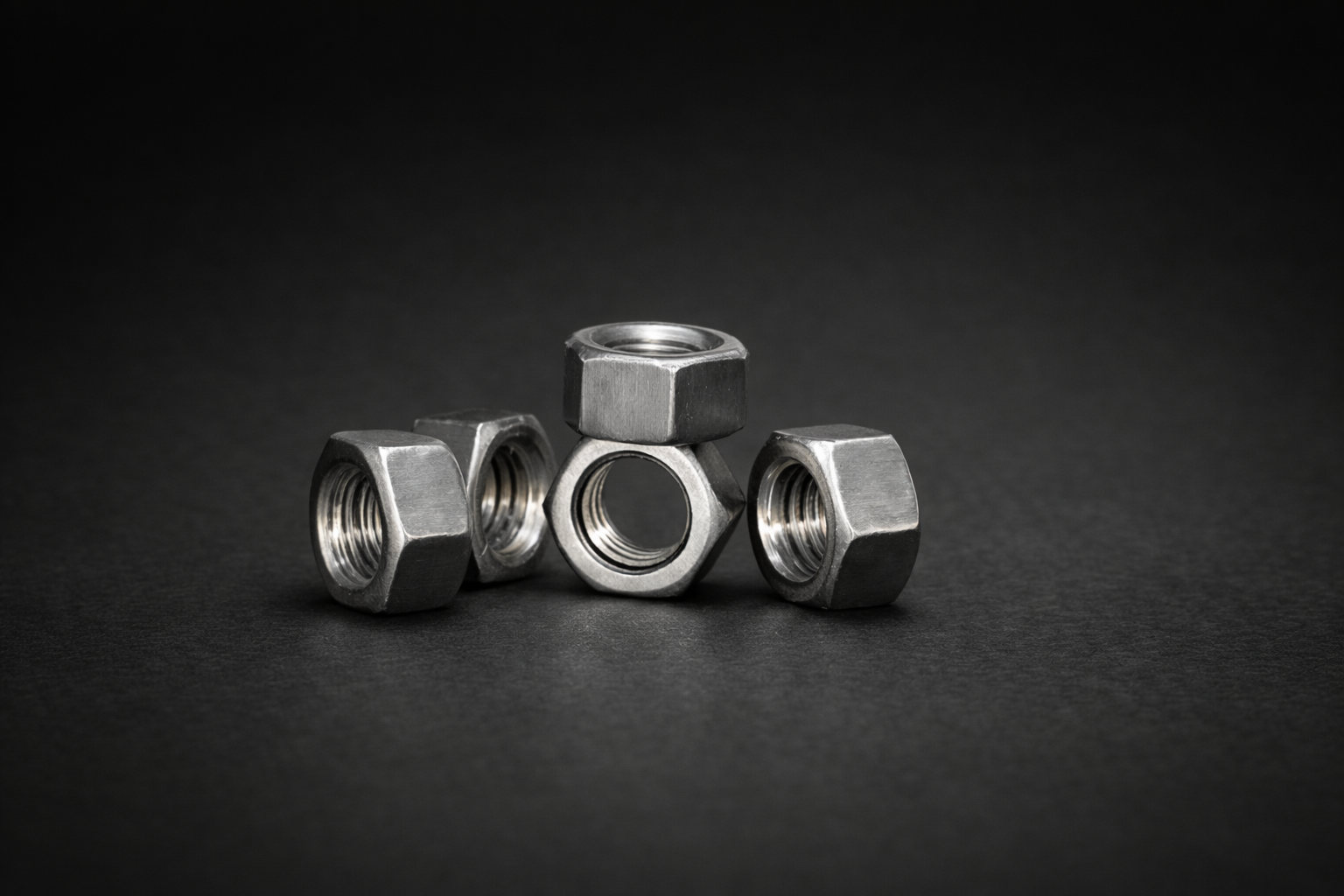
1. Hex Nut
Six-sided nut used with a matching threaded bolt in general assemblies. A wrench can grip its flat sides. Learn more about the hex nut product and confirm dimensions, material and availability before ordering.
2. Flange Nut
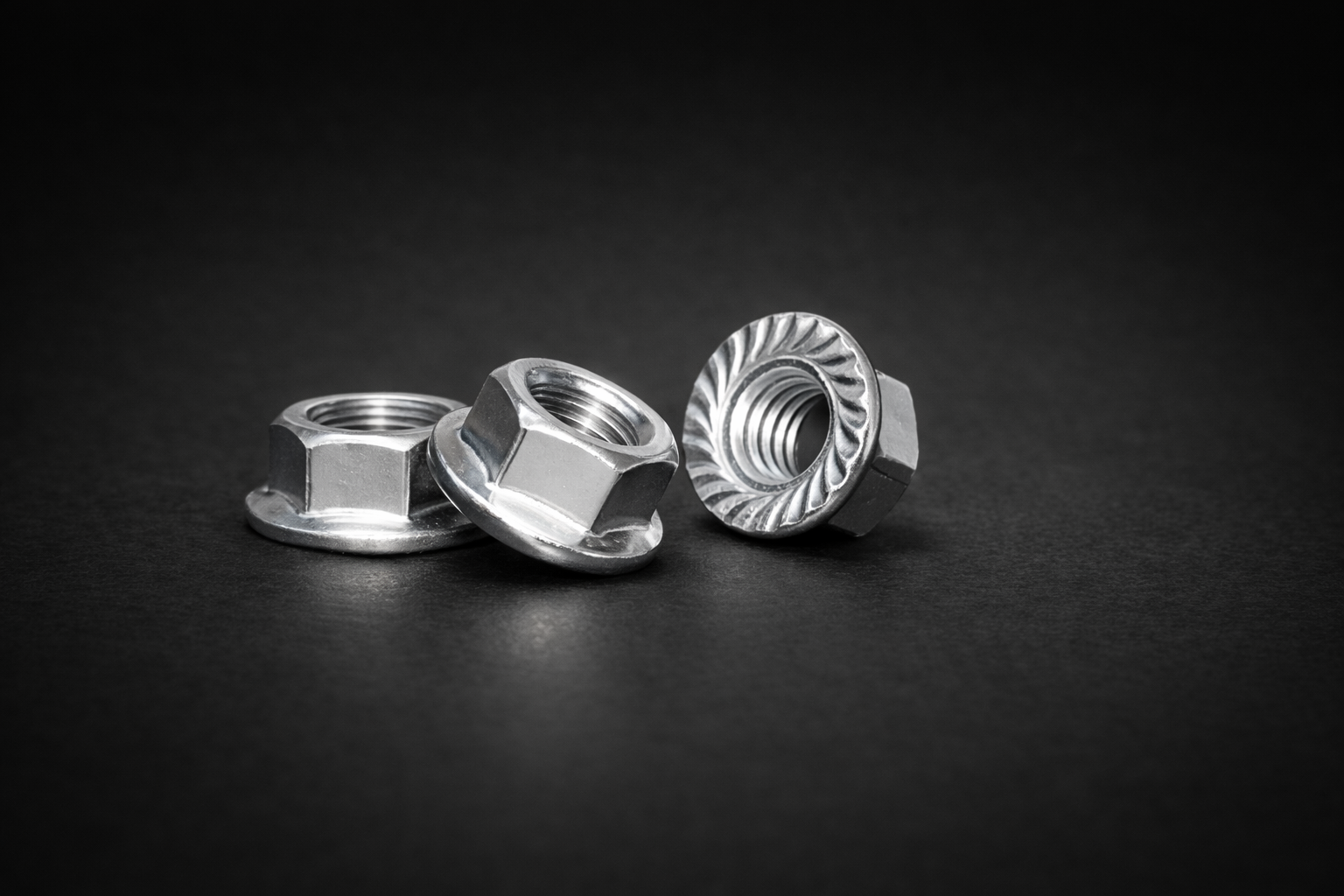
Includes a wider bearing face beneath the nut. The flange can spread contact pressure across a larger area, depending on the joint design. Learn more about the flange nut product and confirm dimensions, material and availability before ordering.
3. Square Nut
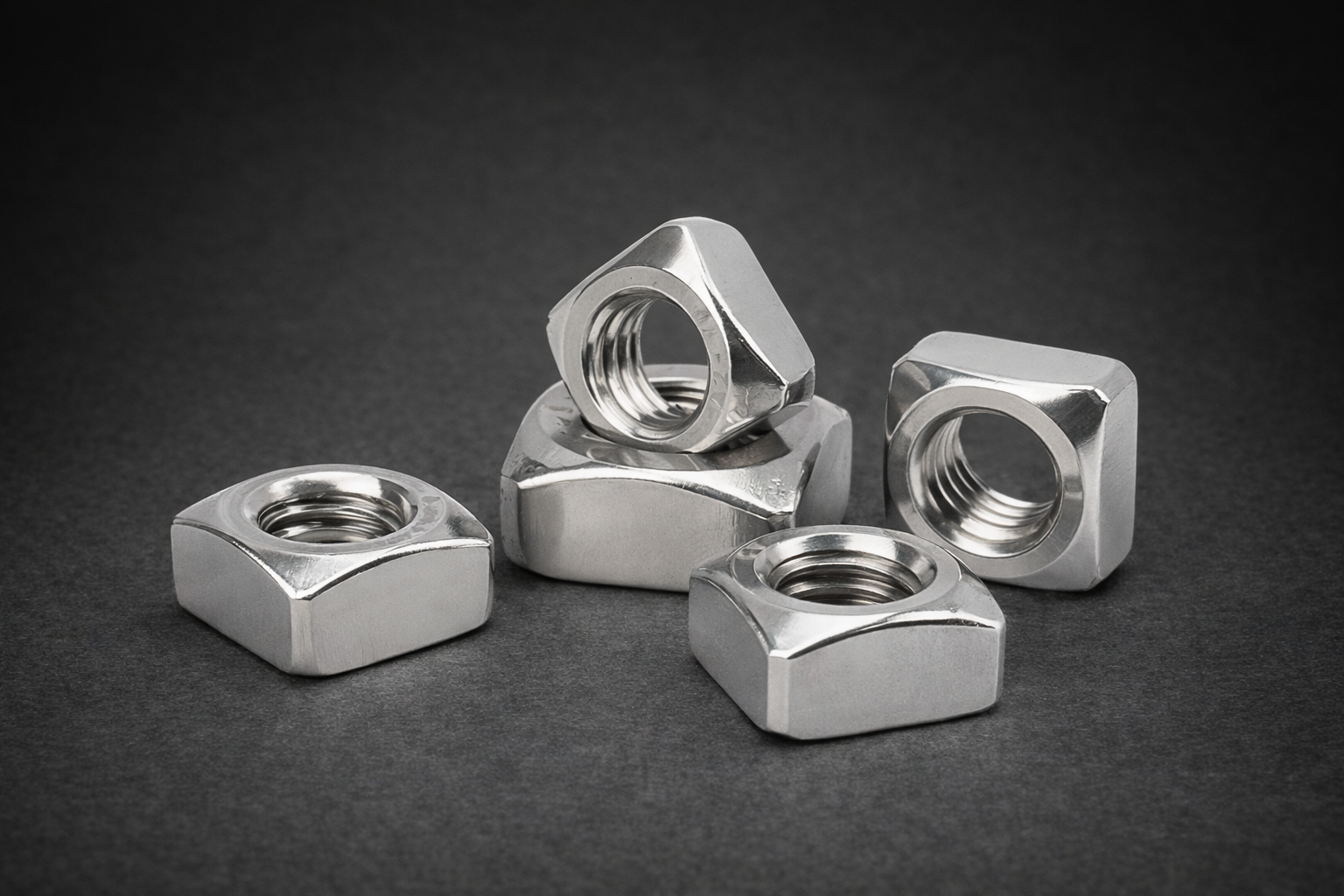
Four-sided nut suited to applications where a square profile offers a useful bearing or holding surface. Learn more about the square nut product and confirm dimensions, material and availability before ordering.
4. T Nut
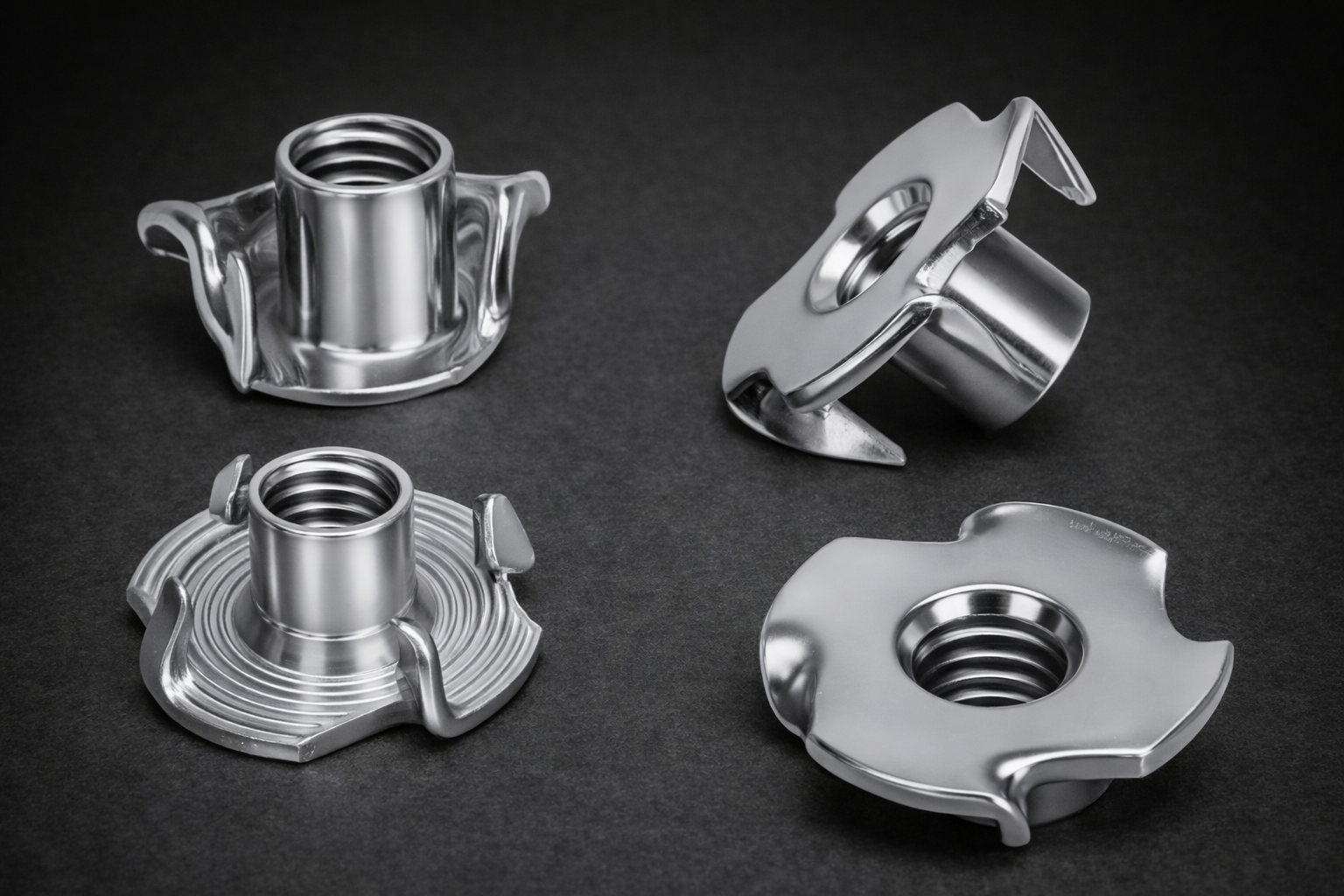
Often used in furniture and wood components where a threaded fixing needs to sit in or against the material. Learn more about the t nut product and confirm dimensions, material and availability before ordering.
5. Wing Nut
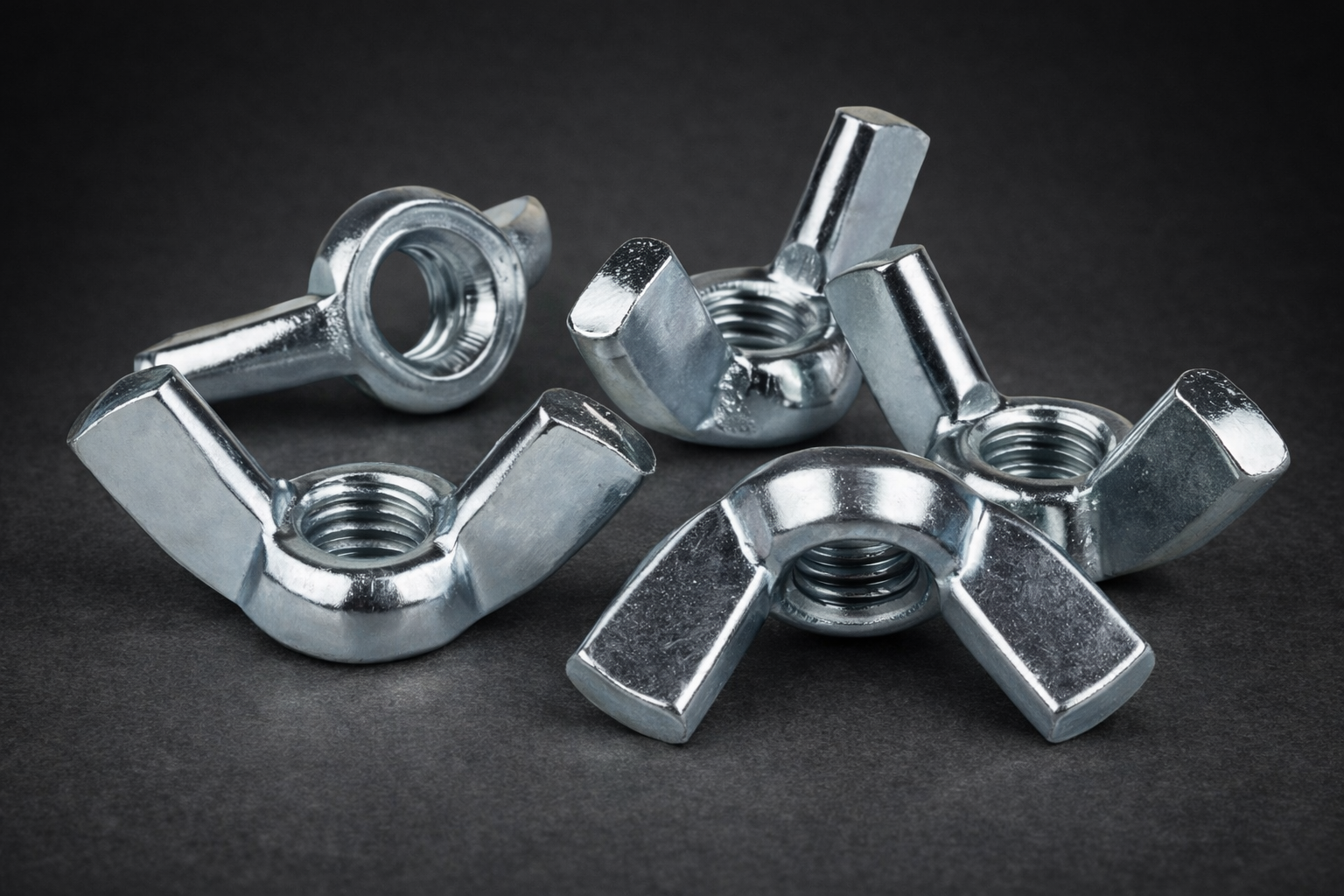
Has wings for frequent hand adjustments where hand-tightening is appropriate and design requirements allow it. Learn more about the wing nut product and confirm dimensions, material and availability before ordering.
6. Wheel Nut
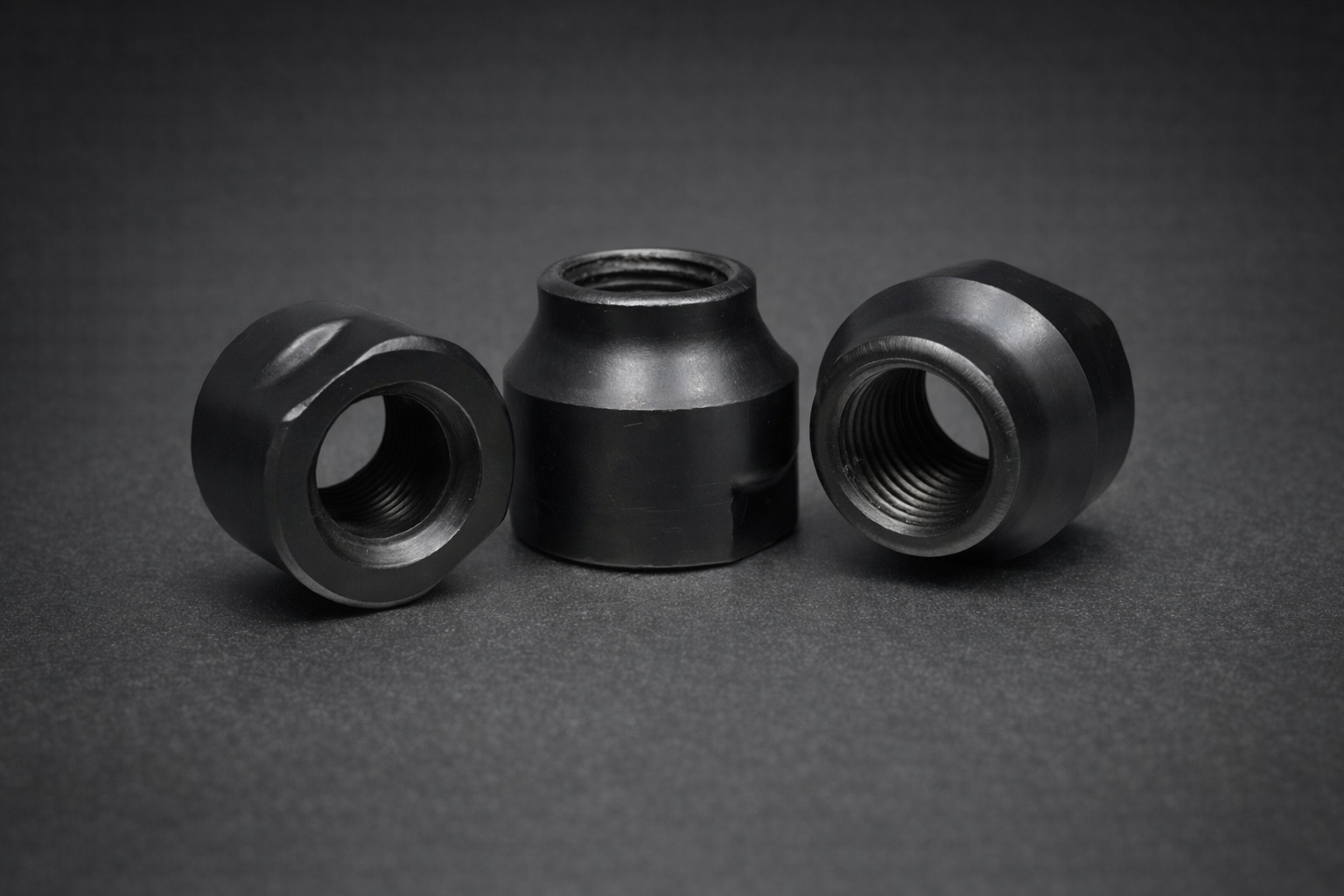
Designed for wheel-retention systems. Seat shape, thread and tightening requirements must match the vehicle manufacturer’s specification. Learn more about the wheel nut product and confirm dimensions, material and availability before ordering.
7. Castle Nut
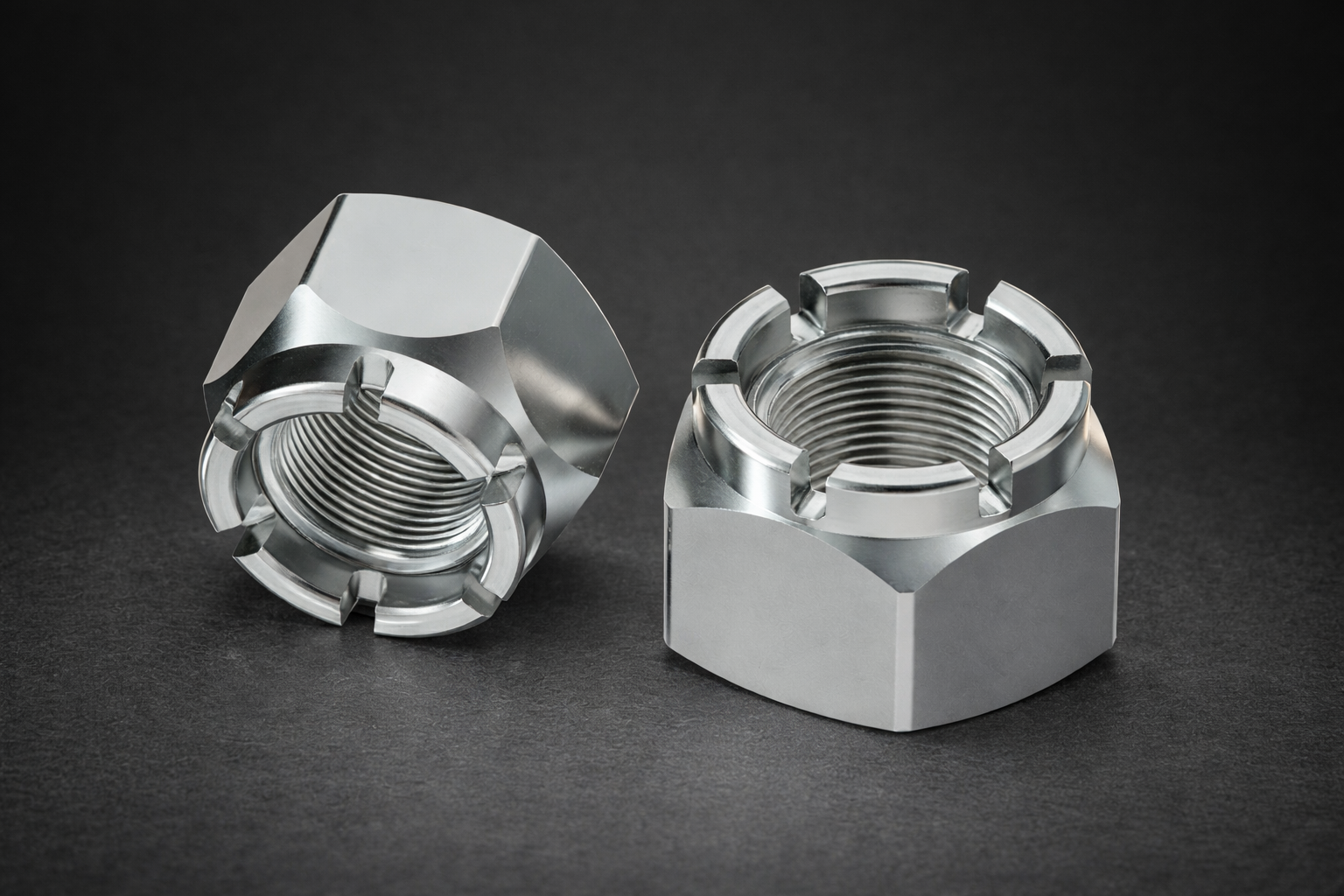
Features castellations for a cotter pin or an equivalent locking arrangement when used with a compatible drilled fastener. Learn more about the castle nut product and confirm dimensions, material and availability before ordering.
8. Slotted Nut
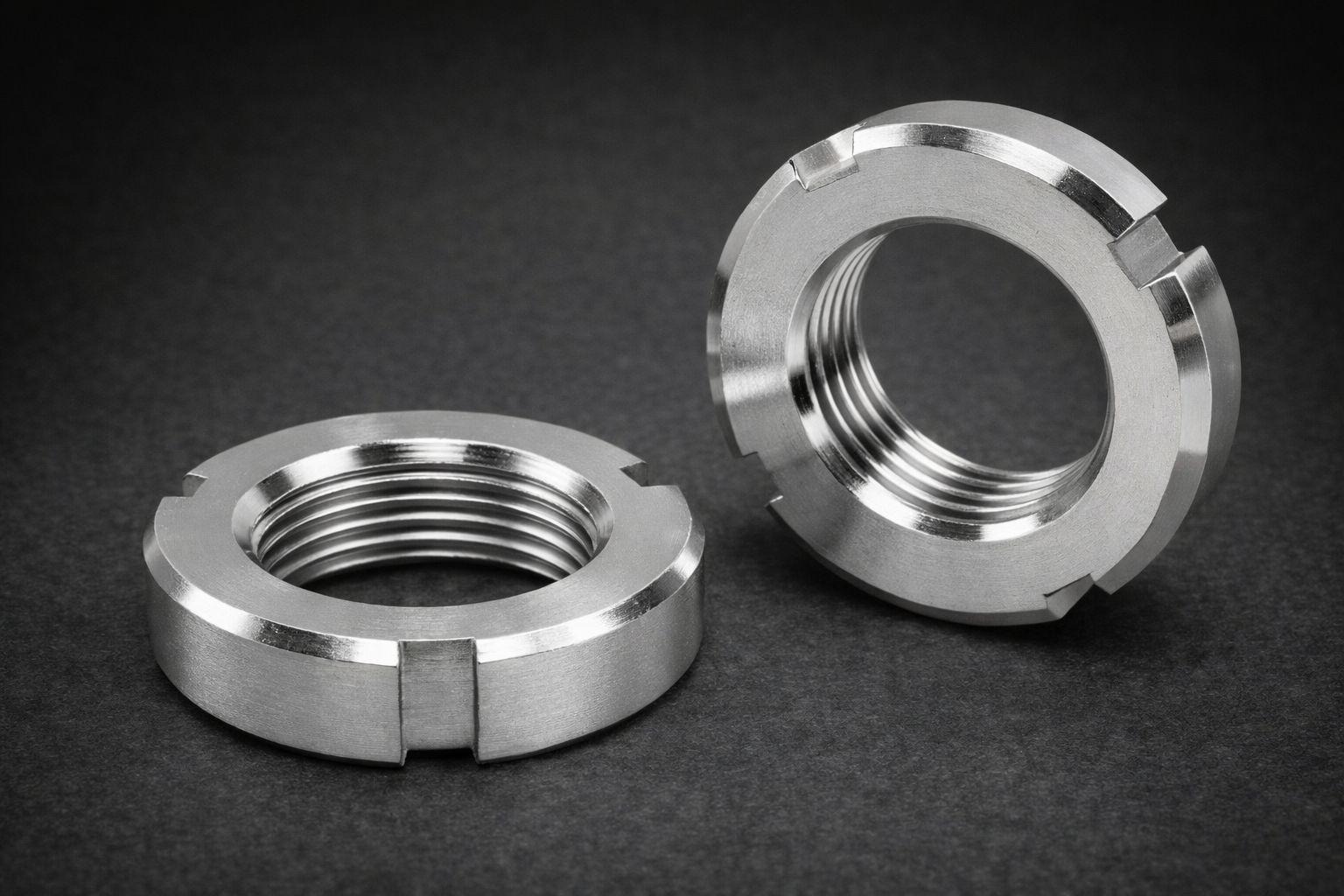
Features slots that can accept a locking pin with the correct mating bolt or stud. Learn more about the slotted nut product and confirm dimensions, material and availability before ordering.
9. Jam Nut
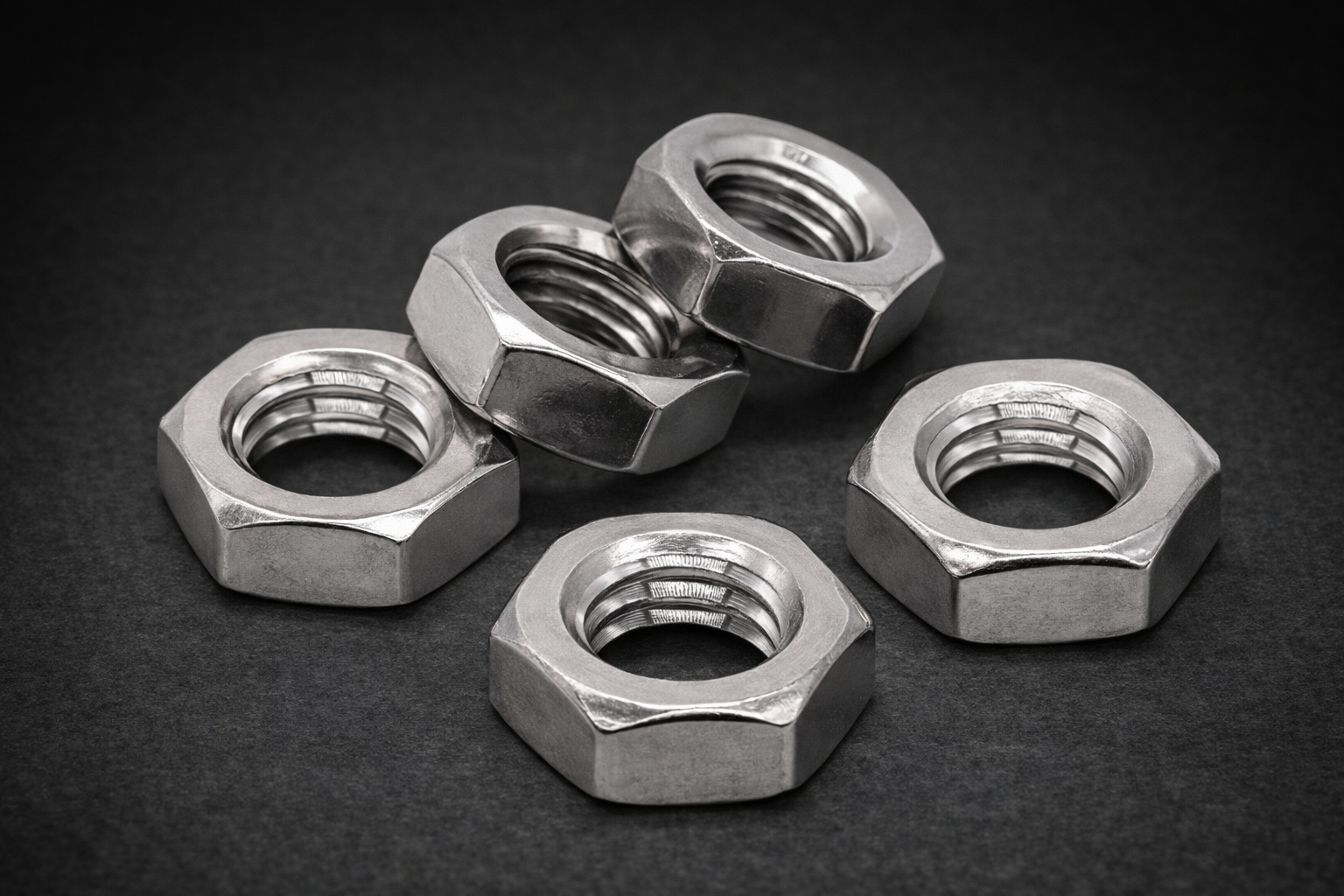
A thinner nut often used in a two-nut locking arrangement when correctly specified and assembled. Learn more about the jam nut product and confirm dimensions, material and availability before ordering.
10. Coupling Nut
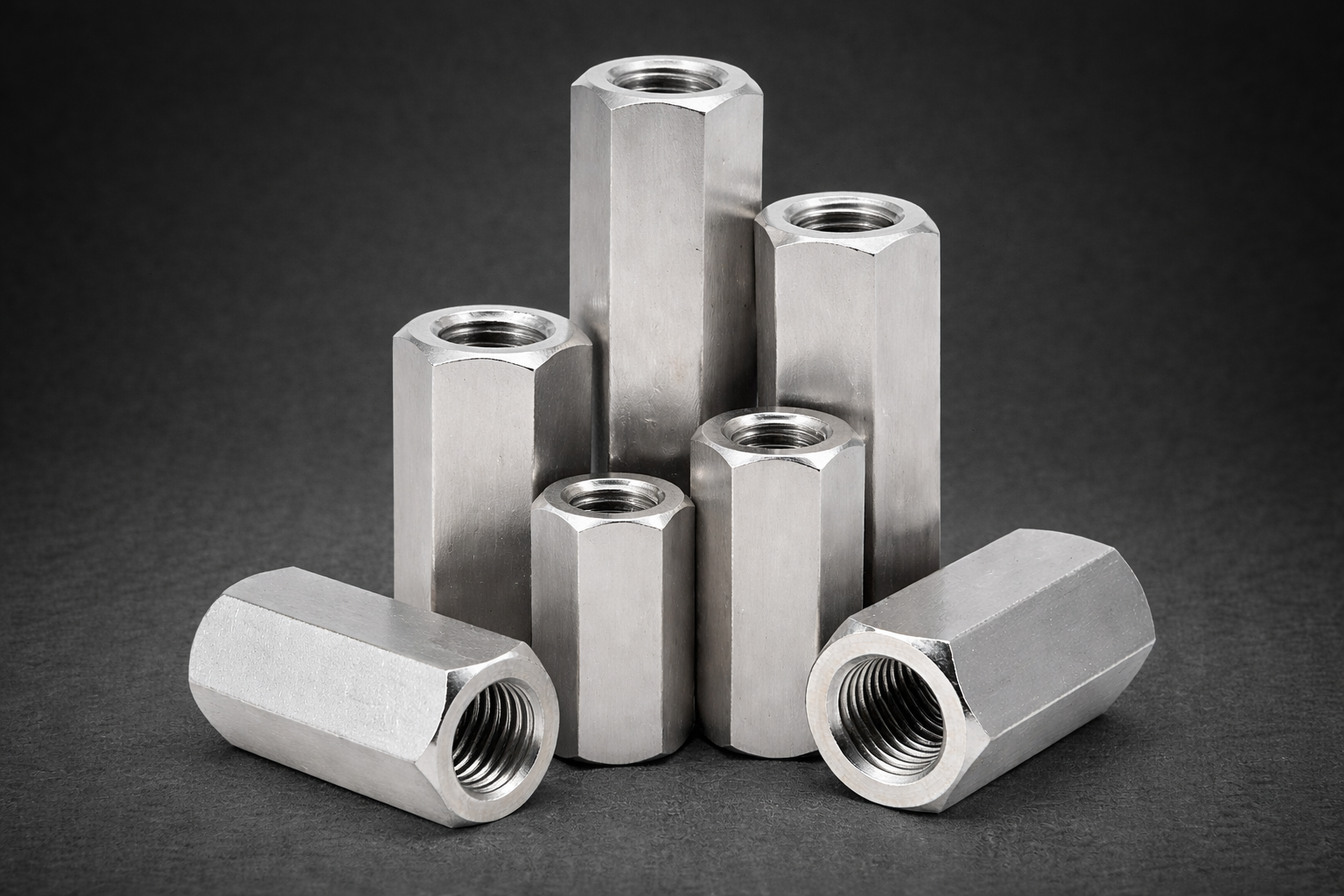
An elongated nut used to connect compatible threaded rods or fasteners end to end. Learn more about the coupling nut product and confirm dimensions, material and availability before ordering.
11. Cap Nut
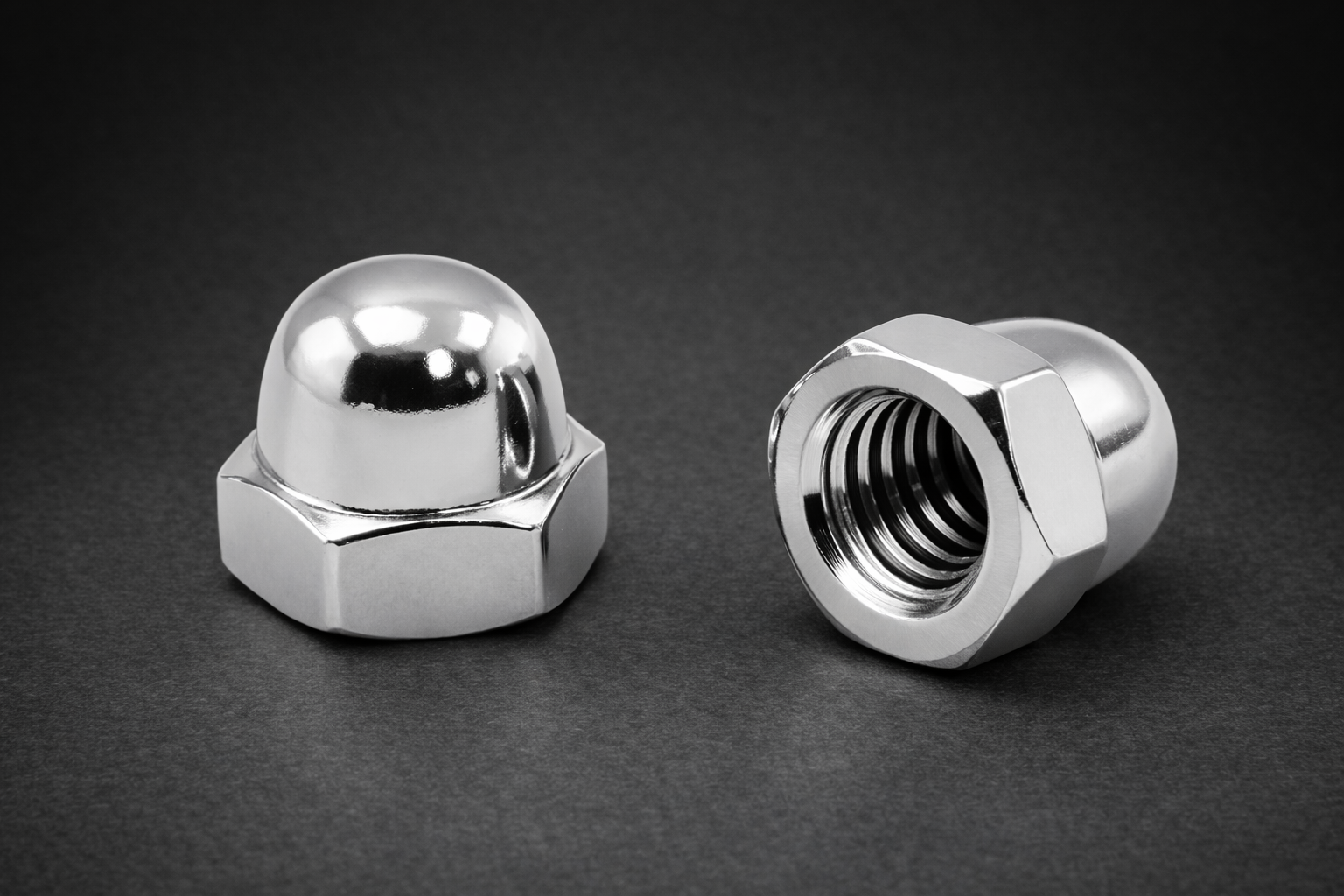
Has a closed end that covers the exposed end of a mating thread, where adequate thread engagement is achieved. Learn more about the cap nut product and confirm dimensions, material and availability before ordering.
12. Insert Nut
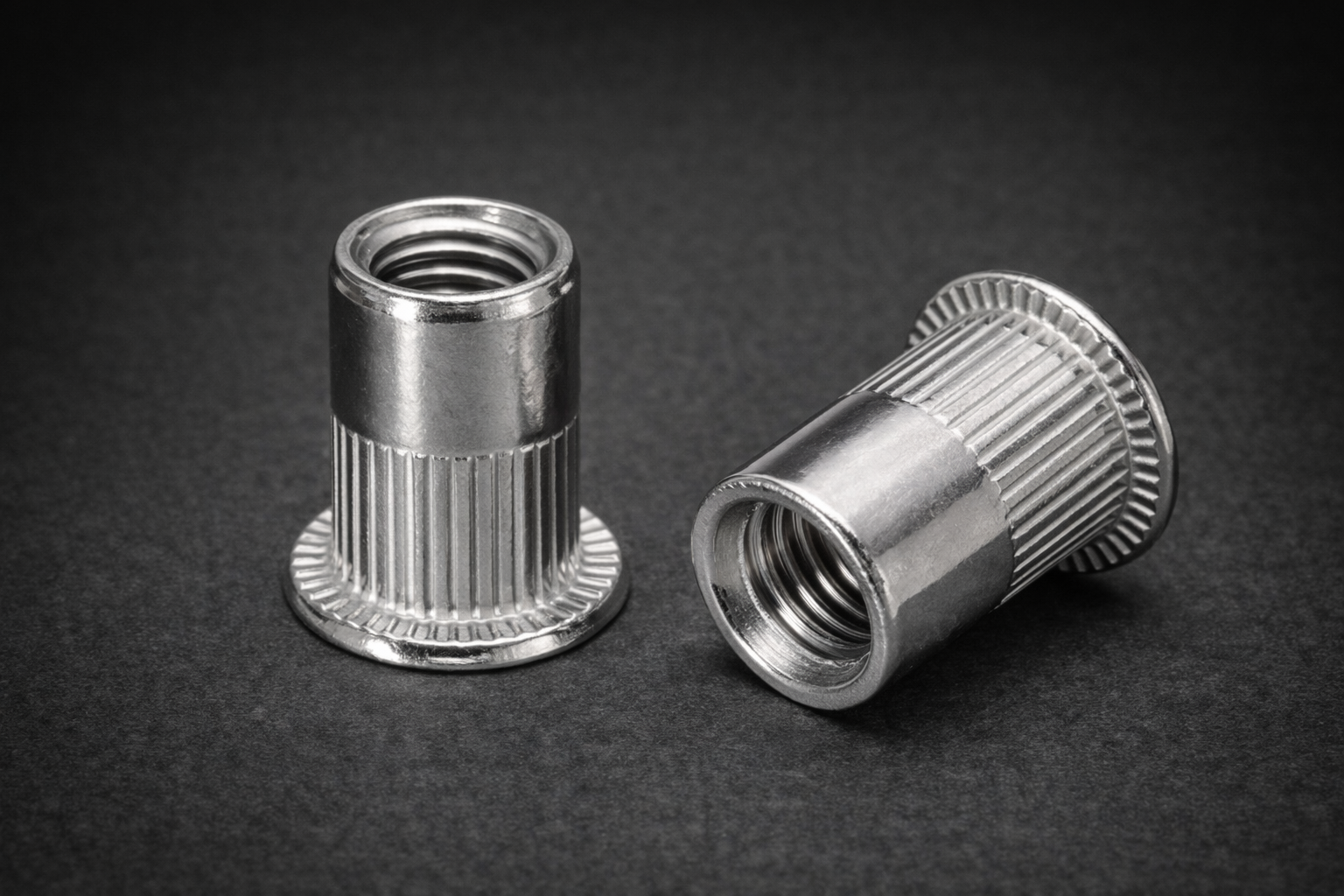
Provides internal threads within another component, such as a prepared wood or manufactured part. Learn more about the insert nut product and confirm dimensions, material and availability before ordering.
13. Nylon Lock Nut
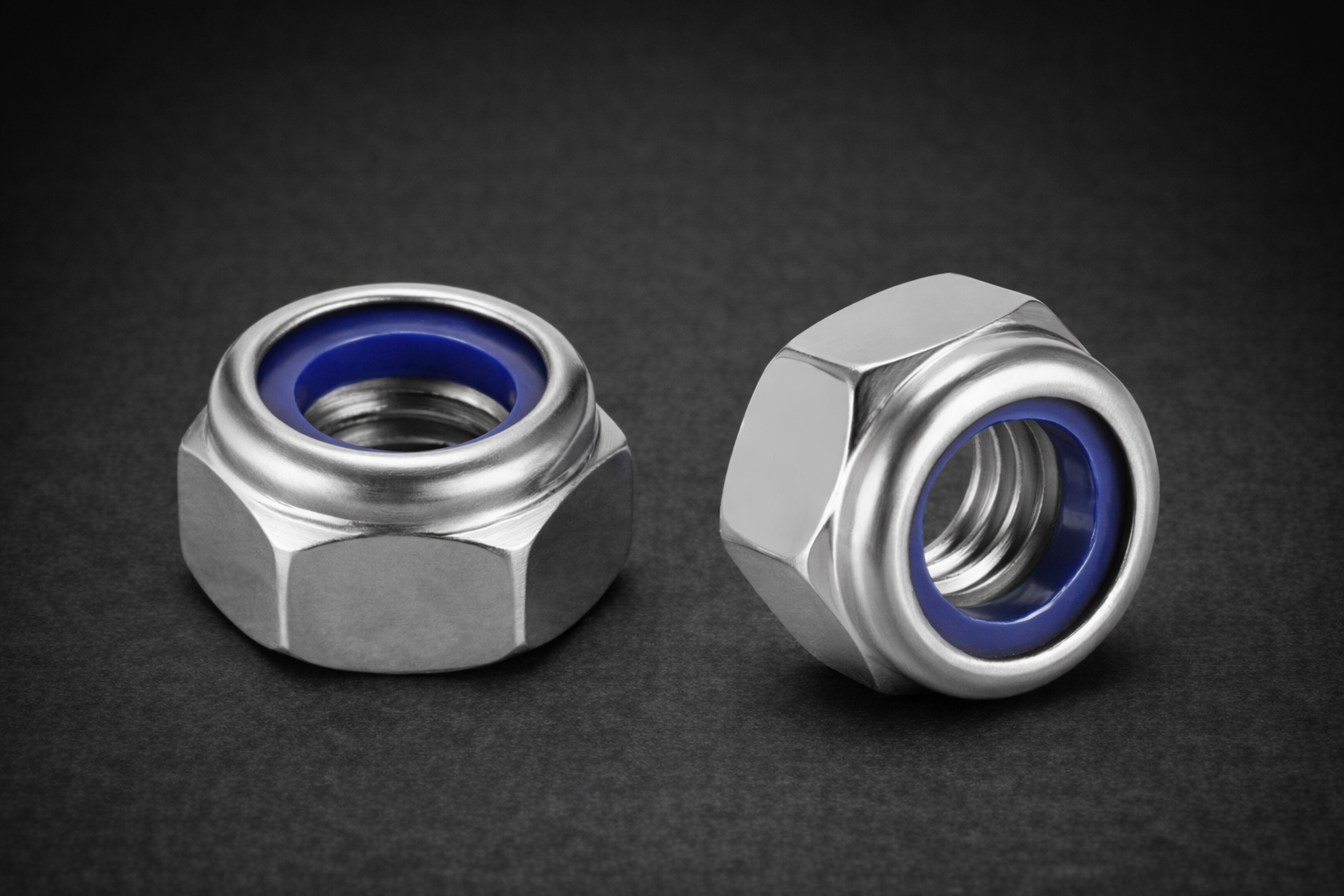
Uses a nylon insert to create prevailing resistance to turning. Check temperature and reuse requirements for the application. Learn more about the nylon lock nut product and confirm dimensions, material and availability before ordering.
Other Nut Types Commonly Used in Industry
Beyond the 13 styles currently listed in our catalogue, buyers may come across the following common industrial designs. The descriptions explain typical uses; they do not indicate that Hameed Engineering currently stocks or manufactures these additional styles.
14. Heavy Hex Nut
A heavy hex nut has a wider bearing dimension across its flats than a standard finished hex nut of comparable nominal thread size. It is used in specified heavy-duty and structural bolted assemblies; the correct nut grade and standard must be selected for the matching bolt. This style is included for educational comparison and is not currently listed in the Hameed Engineering online catalogue. Please enquire to confirm possible supply.
15. All-Metal Lock Nut
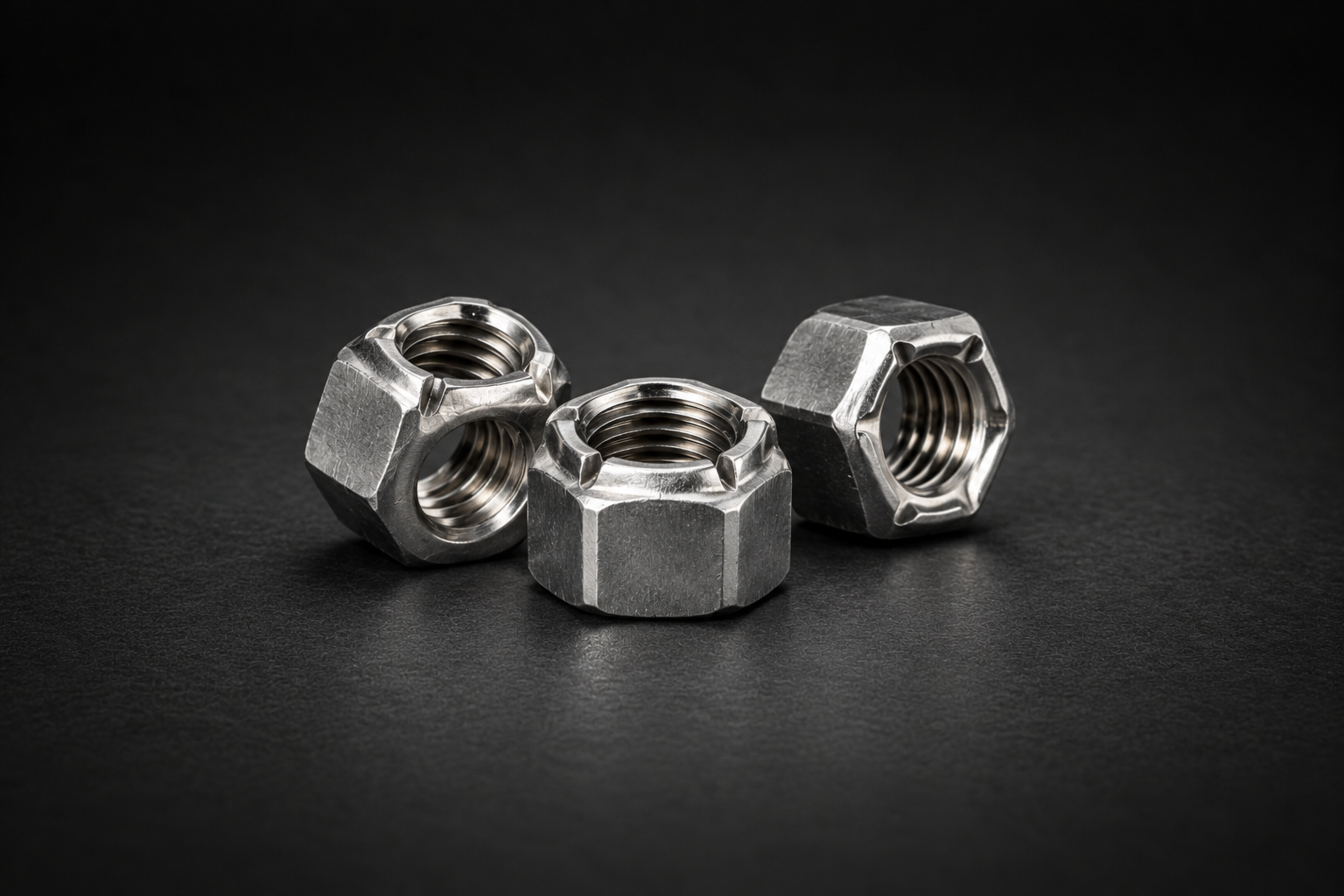
An all-metal prevailing-torque lock nut relies on a designed metal locking feature rather than a nylon ring. It may be useful in assemblies where the specified operating conditions do not suit a nylon insert. Follow the manufacturer’s guidance for installation and reuse. This style is included for educational comparison and is not currently listed in the Hameed Engineering online catalogue. Please enquire to confirm possible supply.
16. Weld Nut
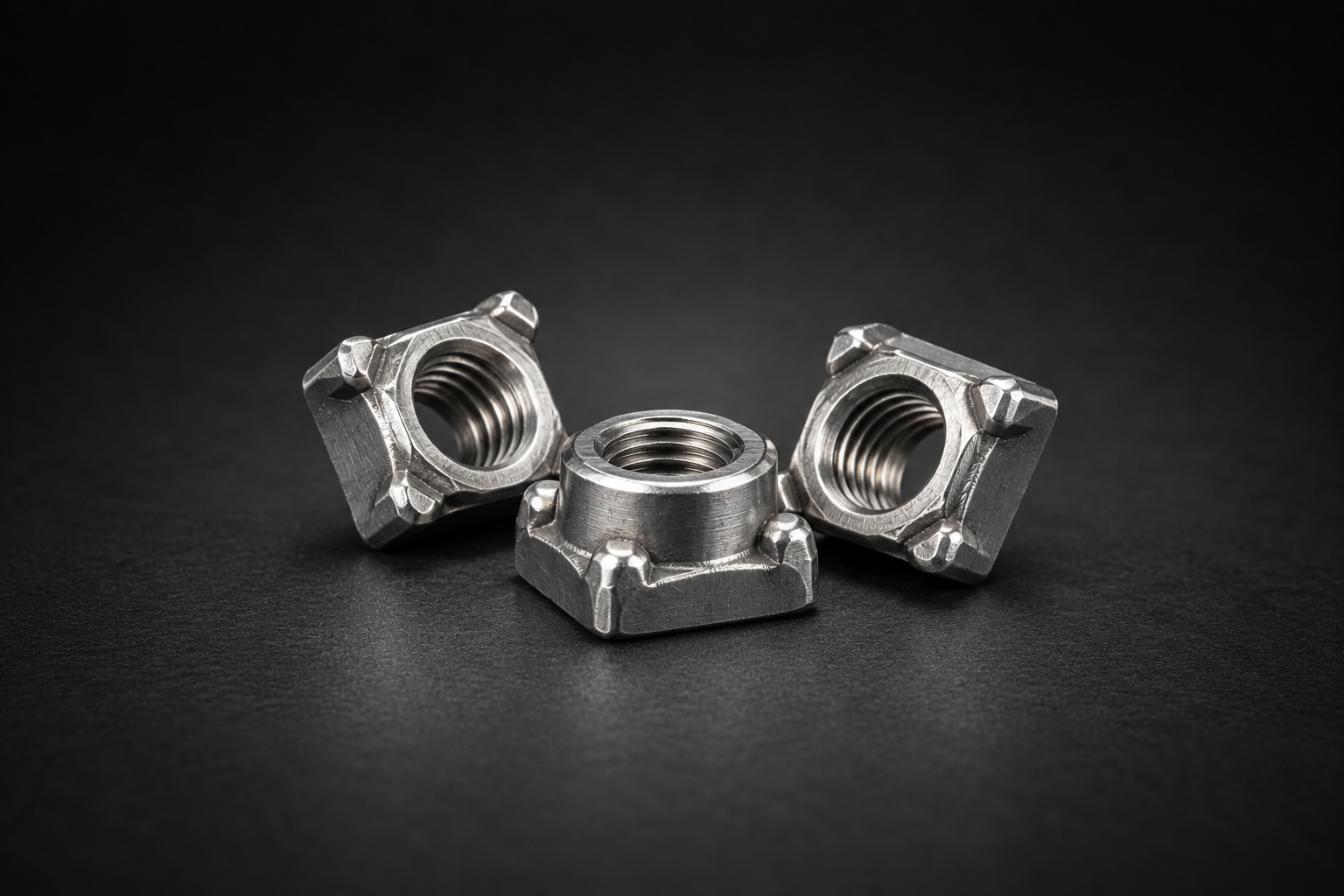
A weld nut is made to be welded to a suitable metal component, providing a permanent threaded attachment point. Square and hexagonal weld-nut designs exist. Weld preparation and compatibility depend on the specific materials and design. This style is included for educational comparison and is not currently listed in the Hameed Engineering online catalogue. Please enquire to confirm possible supply.
17. Eye Nut
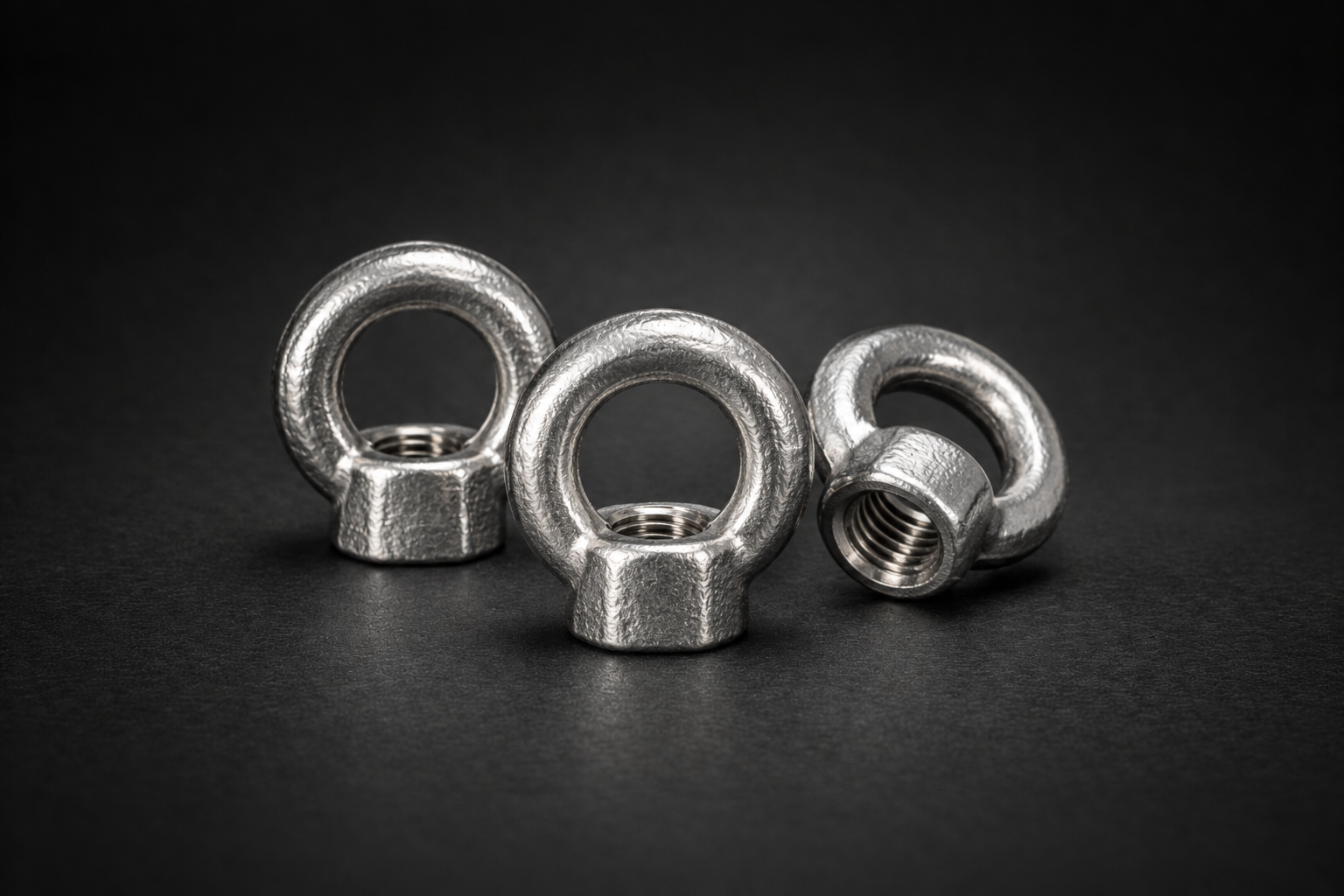
An eye nut includes a ring-shaped attachment point and is used in rated lifting or securing systems when specifically designed and certified for that purpose. Never assume an ordinary ring-shaped nut is approved for lifting; check the applicable rated load, direction and installation rules. This style is included for educational comparison and is not currently listed in the Hameed Engineering online catalogue. Please enquire to confirm possible supply.
18. Rivet Nut (Nutsert)
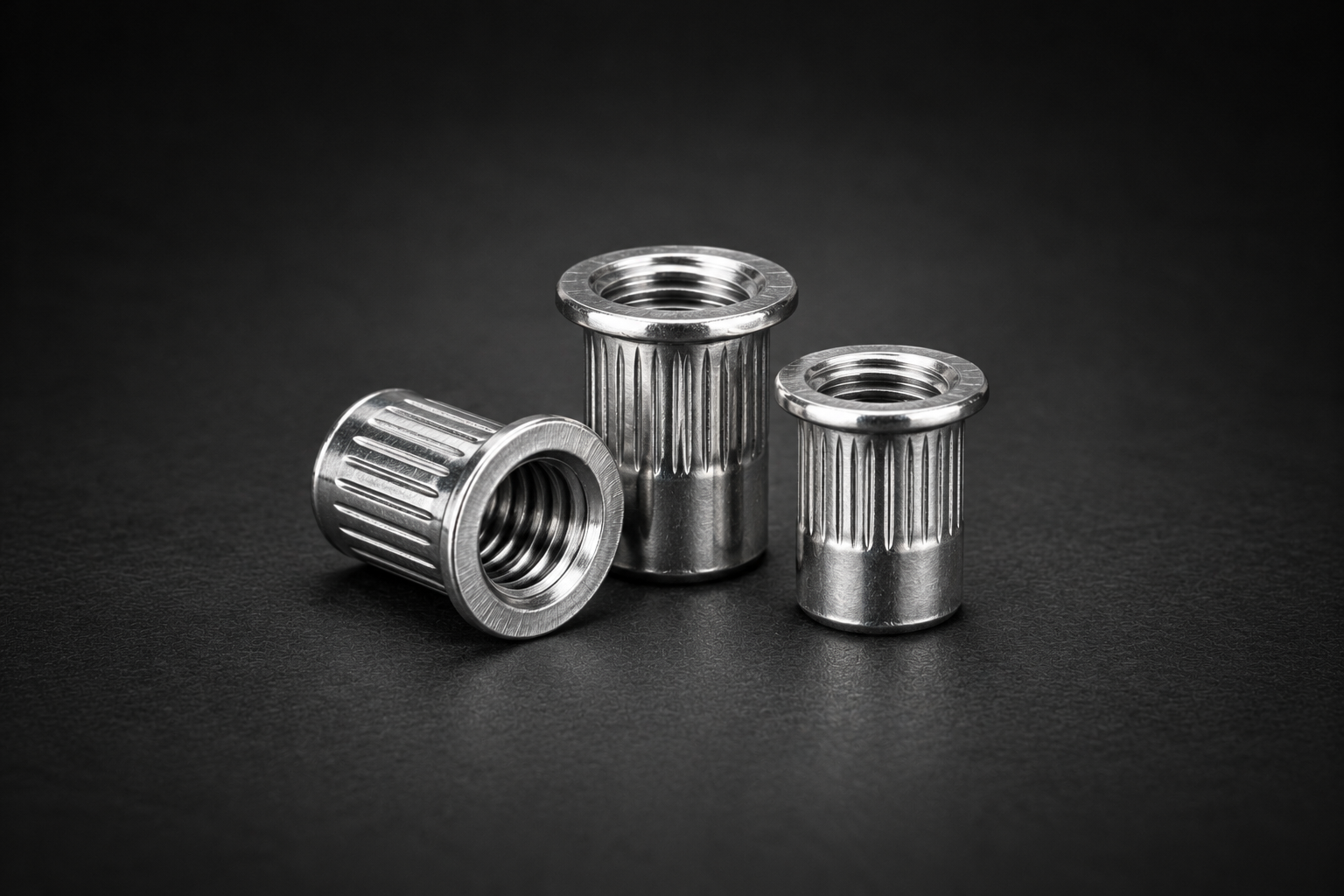
A rivet nut provides an internal thread in thin sheet metal or a hollow section where access is available from one side. It is installed using an appropriate setting tool and selected for the sheet thickness and application. This style is included for educational comparison and is not currently listed in the Hameed Engineering online catalogue. Please enquire to confirm possible supply.
19. Knurled Thumb Nut
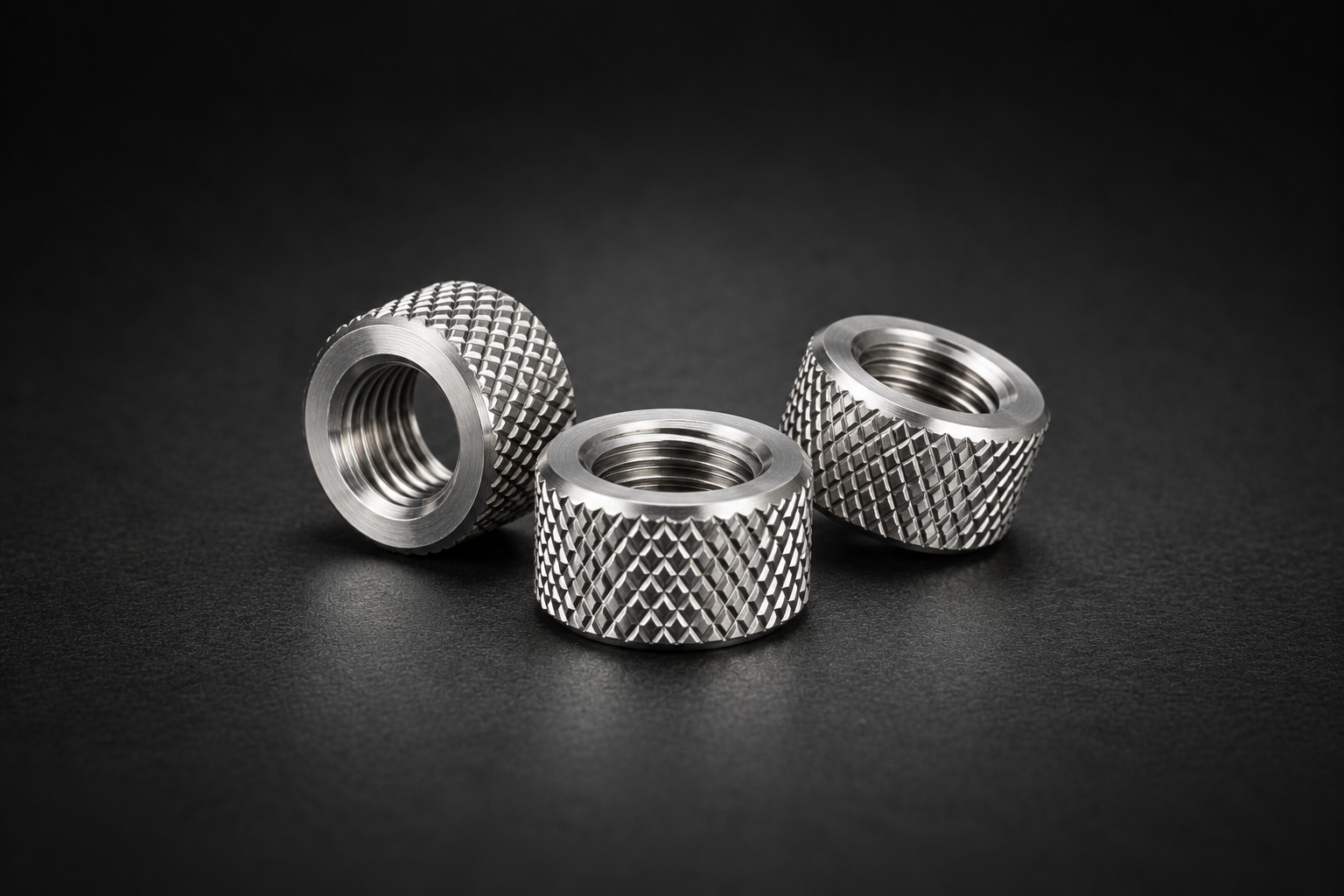
A thumb nut has an outer grip designed for hand adjustment without a wrench. Knurled versions use a textured cylindrical outer surface to improve grip; they are suitable only when the connection’s specified tightening requirement allows manual operation. This style is included for educational comparison and is not currently listed in the Hameed Engineering online catalogue. Please enquire to confirm possible supply.
How to choose the right nut
1. Check the mating thread
Match nominal diameter, thread pitch and thread form with the bolt or stud. Do not force an incompatible nut onto a bolt.
2. Match the joint requirements
Consider vibration, load direction, access for tools, repeated adjustment and whether a locking feature is needed. Safety-critical joints should follow the equipment or engineering specification.
3. Confirm material and finish
Environmental exposure and mating materials influence corrosion protection. Ask for the actual product’s available material, grade and finish rather than assuming all styles are supplied in the same options.
4. Send clear ordering details
For an accurate quotation, share the nut type, thread size and pitch, required quantity, material or finish if specified, and a photo or technical drawing where useful.
Related guides
For construction-specific applications, read Different Types of Nuts Used in Construction. For matching bolt styles, see Different Types of Bolts and Their Uses, and for local ordering context read Types of Nuts and Bolts Used in Pakistan.
Frequently asked questions
What is the difference between a hex nut and a flange nut?
A standard hex nut has six sides for tool engagement. A flange nut adds a wider bearing face, which may help distribute contact pressure where the joint design calls for it.
Which nut helps resist loosening?
Nylon lock, castle, slotted and correctly used jam nuts provide different locking arrangements. The right choice depends on the joint design, environment and relevant specification.
Can any nut fit any bolt?
No. Threads must match, and the nut’s grade and other characteristics must suit the joint requirements.
Request a quotation
Hameed Engineering supplies industrial nuts and bolts from Gujranwala, Pakistan. To check specifications, availability and bulk-order pricing, request a price quotation from Hameed Engineering.

Hameed Engineering
Hameed Engineering is a Gujranwala-based manufacturer of industrial nuts, bolts and custom fasteners. We make standard and AutoCAD-based custom fasteners for construction, automotive, machinery and general industrial use — with manufacturing and bulk pricing on request.
Related Fastener Guides


